The homeowner who called me last August had been smelling her hallway outlet for two weeks, and she blamed the neighbor's pool. What does ozone smell like? Sharp and metallic, close to chlorine or bleach, which is exactly why her guess made sense. It also nearly cost her a bedroom. Your nose catches this gas at concentrations no meter in a homeowner's drawer will register, so the smell counts as information rather than an annoyance. Where you notice it, and when, decides which professional you call. One of those calls shouldn't wait until Monday.
TL;DR Quick Answers
What does ozone smell like?
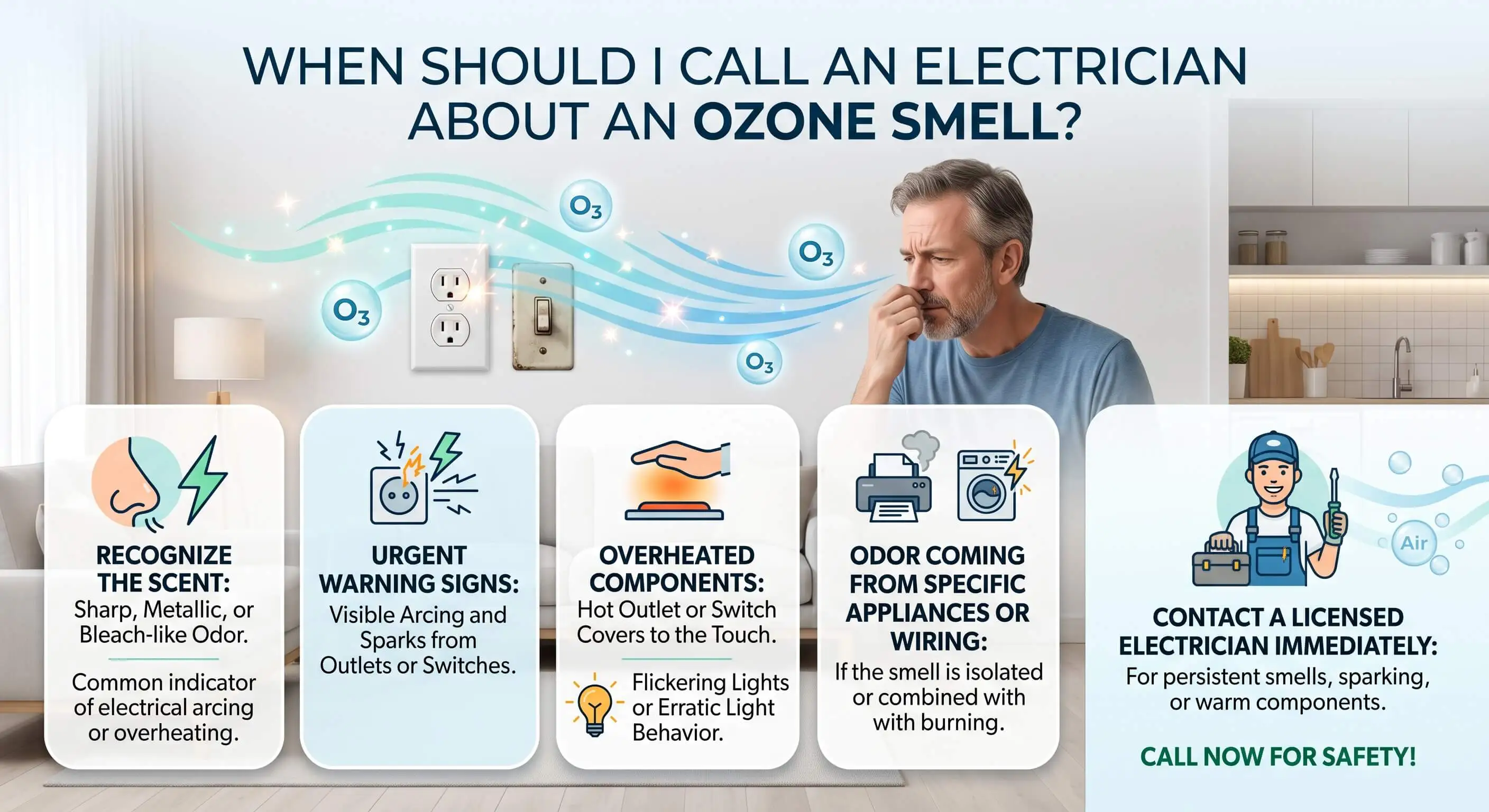
Ozone smells sharp and metallic, closest to chlorine or bleach, like the air right after a lightning strike. Outdoors that scent is harmless. Indoors it usually means something is making it, and where you smell it matters more than how strong it seems.
Closest comparison: chlorine or bleach, the way an indoor pool smells
Other ways people describe it: hot metal, electric, or the tang in the air before a thunderstorm rolls in
Near an outlet, switch, or panel: likely electrical arcing. Shut that circuit off at the breaker and call a licensed electrician
Only when the air conditioning runs: likely HVAC equipment or a UV-C lamp installed in the air handler
Rotten eggs instead of chlorine: that isn't ozone. Leave the building and call the gas utility or 911 from outside
What I've learned on AC service calls: the smell fades well before the problem does, so a fading odor proves nothing about whether the source stopped
Top Takeaways
The odor is distinctive: sharp, metallic, close to chlorine or bleach, much like the air during a thunderstorm.
Location sets the urgency. A smell at an outlet, switch, or panel points at arcing, and that one needs a licensed electrician.
Timing points at equipment. An odor that shows up with the system cycle usually traces to HVAC components or an installed UV lamp.
Devices are often the culprit: ozone generators, ionizers, and laser printers all make the gas with no fault involved.
Sulfur is a different emergency. Rotten-egg smells mean you leave the building and call the gas utility or 911 from outside.
What does ozone smell like, and why the location changes the answer
Ozone is oxygen wearing a third atom, written as O3, and that extra atom leaves the molecule restless and quick to react. Your nose is reading that restlessness. People land on chlorine, bleach, hot metal, or the crisp edge of the air just before a storm breaks, and every one of those descriptions gets at something true. The chemistry behind ozone explains why electrical discharges keep making it.
Here's the part most homeowners miss. The smell fades faster than the problem does, so an odor that seems to be clearing tells you nothing about whether the source stopped. I walked into rooms where the homeowner was sure it had passed and found a connection still running hot. For a fuller breakdown of the odor itself, and how to tell it apart from musty, sulfur, and burnt-plastic smells, this guide on what does ozone smell like goes deeper on identification than I will here.
When the smell points at your wiring
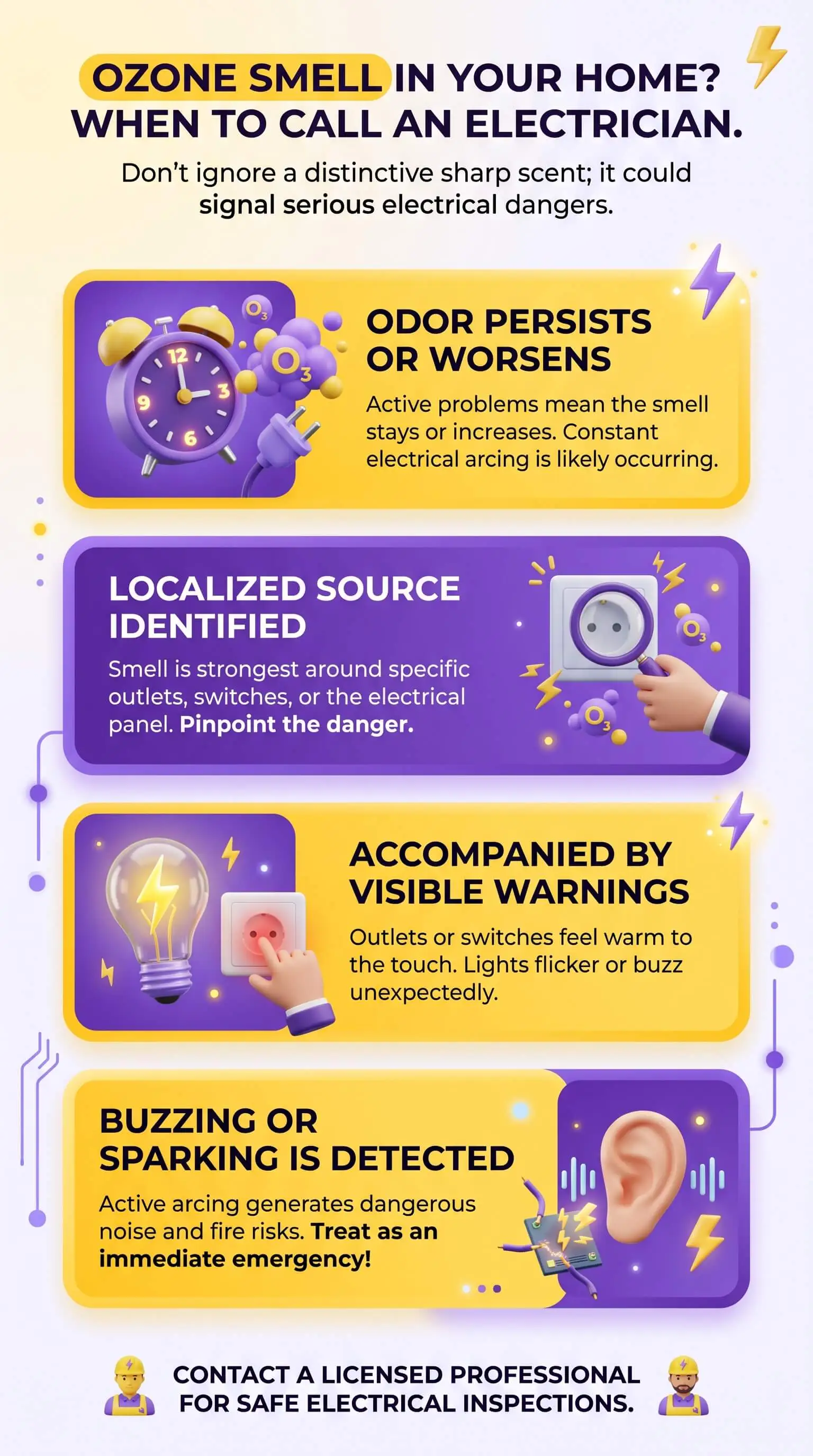
Arcing is the case that matters. A connection loosens or insulation breaks down, current jumps a gap nobody designed for it, and that discharge splits the oxygen around it into ozone. A sudden chlorine-like or electrical smell near an outlet, a switch, or a panel earns attention today, not next weekend.
The smell rarely travels alone. Watch for:
Warmth: a faceplate or cover plate that feels warm against the back of your hand
Sound: a faint buzz or sizzle you only catch once the room goes quiet
Staining: discoloration or a brown halo around a receptacle
Voltage sag: lights that dip when a big appliance kicks on
The hallway circuit in that August call had a lug loose enough that the copper around it had gone dark. Two weeks of smell, and no other symptom she'd noticed.
What to do is short. Stop using the outlet or the device, shut that circuit off at the breaker, and get a licensed electrician to inspect it before anything goes back into service. That smell is often the only warning you get before something inside a wall gets hot enough to light what's sitting next to it.
When the smell points at your HVAC equipment
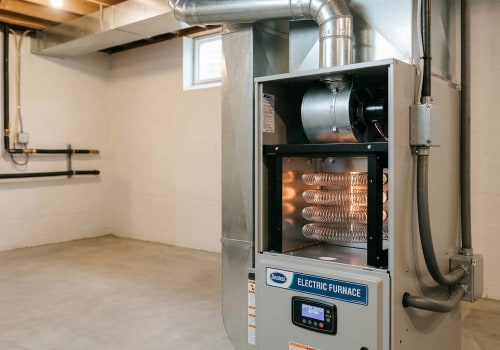
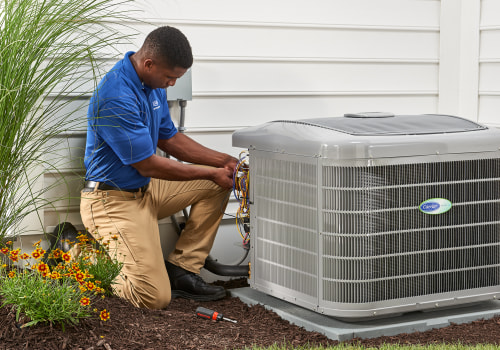
An odor that arrives with the cycle and fades once the system stops sends me to the equipment instead. Contactors pit and chatter as they age. Blower motors run hot when a bearing dries out or a filter has been sitting in place for six months, and capacitors tend to swell before they quit. A UV-C lamp mounted in the air handler makes ozone on purpose, and I've met plenty of homeowners who never knew one was in there.
That timing is the whole decision. A smell tied to the cycle means you call an HVAC technician. A smell that lives at an outlet or panel and doesn't care whether the system is running means you call an electrician. When the odor sits at the disconnect box or the breaker feeding the condenser, both trades belong in the conversation, and I want the electrician looking first.
When it isn't an electrical problem at all
Plenty of ozone smells have no fault behind them. Ozone generators and some ionizers sold as air purifiers make the gas deliberately, which is the wrong tool for any room where people and pets are breathing. Laser printers put out small amounts in tight spaces. Outdoor ozone drifts in through open windows on hot, sunny afternoons. The fix in all three cases runs the same way. Stop the source, then move air through the room.
One smell doesn't belong on this list. Rotten eggs or sulfur isn't ozone, and it isn't a wait-and-see situation. Get out of the building and call your gas utility or 911 from outside. Keeping a MERV 8 pleated HVAC air filter in your HVAC system supports cleaner indoor air, but it should never delay responding to a suspected gas leak.
“Nine times out of ten the homeowner smelled it a week before they called me, and that week is the whole margin I get to work with.”
7 Essential Resources
The fault behind most of these smells
Arc faults happen when damaged, loose, or overheated wiring lets current jump where it shouldn't, and they're the reason an ozone smell can turn into a fire. This nonprofit explains how arc-fault circuit interrupters catch that condition, and where the code now requires them: Electrical Safety Foundation International.
What ozone does to you at levels you can smell
The federal occupational health entry lists ozone as a colorless to blue gas with a very pungent odor, and records eye and mucous membrane irritation among the symptoms of exposure: NIOSH Pocket Guide to Chemical Hazards.
The exposure limit the trades work to
Workplace ozone falls under the federal air contaminants standard. The agency spells out the permissible limit, and the order in which controls have to be applied: Occupational Safety and Health Administration.
Read this before you buy an air purifier
Some devices marketed as air cleaners produce ozone on purpose, and no federal agency has approved them for use in occupied spaces. The assessment is worth ten minutes before you spend money: EPA on ozone generators sold as air cleaners.
A state regulator's list of devices to avoid
California certifies indoor air cleaners for ozone emissions, advises against running ozone generators in occupied rooms, and publishes a list of the devices it considers hazardous: California Air Resources Board.
The research on ozone indoors
A national laboratory keeps a running review of the indoor ozone literature, including how poorly ozone generators perform against the pollutants they claim to remove: Lawrence Berkeley National Laboratory.
Two minutes is all a house fire needs
A fire can turn life-threatening in about that long, which is why the escape plan deserves as much attention as the inspection. Before, during, and after guidance sits here: Ready.gov home fires.
3 Statistics
24,200 residential electrical fires in one year. Federal fire data recorded roughly that many residential building electrical fires in 2021, causing an estimated 295 deaths, 900 injuries, and more than $1.2 billion in property loss: U.S. Fire Administration.
Nearly half of electrical failure fires involve arcing. About 46 percent of non-home fires attributed to electrical failure or malfunction involved some form of arcing, which is the same discharge making the smell you're chasing: National Fire Protection Association.
152.3 million people breathe air that fails on ozone or particles. That covers 44 percent of people in the United States, living in counties with failing grades for ozone or particle pollution, which is why outdoor air earns a spot on your list of suspects: American Lung Association State of the Air 2026.
These statistics show why unusual odors deserve attention. While an odor that your AC smells musty often points to moisture or microbial growth, a sharp ozone smell may signal electrical arcing or outdoor ozone, making it important to identify the source before the problem becomes more serious.
Final Thoughts and Opinion
My position won't be popular with anyone trying to dodge a service call. An inspection costs a fraction of a burned junction box, and almost nothing against a bedroom fire. When the smell sits near wiring and you can't trace it to something you can unplug, the cheap move is the phone call.
What gets me is how easily this smell gets explained away as pool chemicals, a neighbor cleaning, or weather rolling in. Every one of those is plausible, and plausible is what makes them risky. If you caught ozone indoors, your nose already handled the hard part of the diagnosis. All that's left is acting on it while the repair is still small enough to finish in an afternoon, including confirming that your ionizer installation is functioning as intended as part of a healthy indoor air quality system.
What does ozone smell like in a house?
Sharp, metallic, and chlorine-like, similar to walking past an indoor pool or standing outside while lightning strikes nearby. Some people call it clean or electric. Indoors, that clean association misleads people, because the smell usually means a device is making ozone or something electrical is arcing.
Is an ozone smell in the house dangerous?
The source decides. Outdoor ozone on a hot afternoon or a printer in a stuffy room is low stakes. An ozone or burning odor near wiring signals a fire risk, and that circuit should come off at the breaker. Breathing ozone can also irritate airways and make asthma worse.
Should I call an electrician or an HVAC technician?
Call an electrician when the smell lives at an outlet, switch, or panel and shows up whether or not the air conditioning is running. Call an HVAC technician when the odor arrives with the system cycle and fades afterward. If the disconnect or the breaker feeding the equipment smells hot, start with the electrician.
How long does an ozone smell last?
Ozone breaks back down into ordinary oxygen fairly quickly, often inside half an hour to a couple of hours once the source stops, and faster with windows open and fans running. A smell that keeps coming back means the source is still active, so the search matters more than the ventilation.
Can an air filter remove an ozone smell?
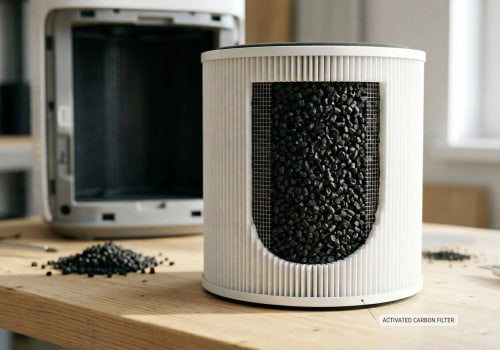
A standard filter catches particles rather than gases, so it won't clear an ozone odor on its own. Filters with an activated carbon layer pull down some ozone, though that capacity fades as the carbon loads up. Removing the source and ventilating stay the reliable answer.
Write Down Where You Smelled It, Then Make the Call
Note the room, the time, and whether the air conditioning was running when the odor showed up, because those three details tell an electrician or a technician more than any description of the smell itself. Hand that note to a licensed professional and let them trace the source while the fix is still a small one. Maintaining high quality air filters as part of your HVAC system also supports cleaner indoor air while the underlying issue is being identified.